

BUILDING INCLUSION
THE BOOK
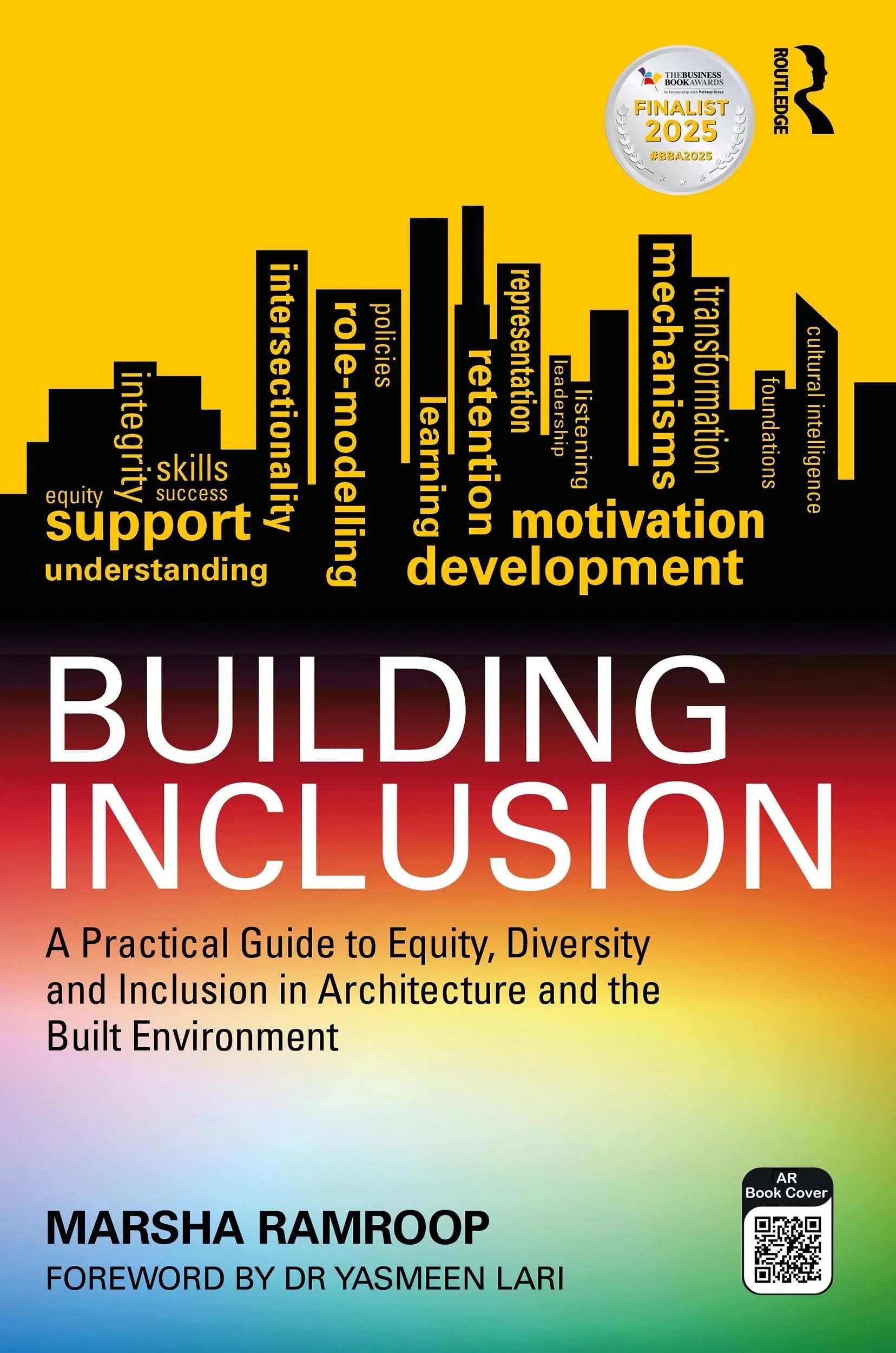
Building Inclusion: A Practical Guide to EDI in Architecture and the Built Environment, was written by Marsha Ramroop with one key purpose: to transform the built environment by providing professionals the tools, guidance, and inspiration to create inclusive cultures within their practice.
-
Building Inclusion is available through Routledge, major book retailers, and as an e-book, and audiobook narrated by me, which many people find helpful for engaging with the reflective parts of the work.
-
Cultural Intelligence is the capability to work and relate effectively across difference.
It has four parts:CQ Drive – do you actually want to engage across difference?
CQ Knowledge – do you understand how people may think, communicate or work differently?
CQ Strategy – do you stop and plan rather than act on instinct and bias?
CQ Action – can you adapt your behaviour in the moment?
My shorthand is:
Diversity is a fact. Inclusion is an act. Equity is the impact – when CQ is unpacked.
AWARDED BUSINESS BOOK AWARDS 2025 | HIGHLY COMMENDED
Building Inclusion: A Practical Guide to Equity, Diversity and Inclusion in Architecture and the Built Environment is just that – a manual to support with how to do EDI in the sector. It focuses on demonstrating the behaviours - culturally Intelligent ones - in order to create, implement and enforce, the policies, procedures and practices to deliver inclusion, across how we attract people into our professions, how we treat progress and retain them, how we create our design and deliver products and services, and how we engage our external stakeholders – including our communities, customers and clients.
It has case studies from organisations doing that well from across the sector, and world, and reminds you why the behavioural piece is important with testimonials of lived experiences of discrimination from colleagues in the professions.